Affiliate Disclosure: BodyScanHQ is an affiliate-supported review site. We earn a commission if you purchase through links on this site, at no extra cost to you. Our rankings are based on independent research — not commission rates. Learn more →
2026 Editorial Review

Best Body Composition Monitors 2026

If you've stood on a basic bathroom scale for six months and watched the same number stare back at you, the problem isn't always your effort. A weight reading collapses fat, muscle, water, and bone into a single number — and that number can't tell you whether you're losing fat or losing the muscle you've worked to build.

We spent weeks researching the top home body composition monitors, analyzing hundreds of publicly available customer reviews, and comparing hardware specs, app quality, and real-world suitability across three price tiers. These are the three devices that deliver the most meaningful data for their price tier — and our #1 pick uses 8-electrode segmental technology that foot-to-foot scales simply can't replicate.

✓ Research-Based Reviews ✓ No Paid Placements

Our rankings reflect editorial judgment based on research, product positioning, and typical use cases. Different products may be better suited to different goals or budgets.

How We Rank These Products

Our rankings are based on five criteria: (1) measurement accuracy and electrode configuration, (2) app quality and long-term data visualization, (3) build quality and ease of use, (4) value relative to price, and (5) analysis of publicly available customer reviews. BodyScanHQ earns affiliate commissions on purchases — our rankings are not influenced by commission rates. The Hume Body Pod earned our #1 ranking based on its 8-electrode segmental analysis and value positioning relative to the Withings Body Scan.

Quick Comparison

Three home body composition monitors across three price tiers. The Hume column is highlighted because it is our editor's choice for most readers in our target audiences.

Hume Health Body Pod Editor's Choice Withings Body Scan RENPHO Smart Body Fat Scale
Editorial rating ★★★★★ Excellent ★★★★☆ Very Good ★★★★☆ Good
Approx. price ~$229 ~$499 ~$25–$35
BIA technology 8-electrode, multi-frequency 8-electrode, multi-frequency 4-electrode foot-to-foot, single frequency
Segmental analysis Yes (5 body regions) Yes No (estimated only)
Reported metrics ~45 ~40+ (incl. ECG, vascular age) ~13
Wi-Fi sync No (Bluetooth only) Yes No (Bluetooth only)
ECG / cardiovascular No Yes (6-lead ECG) No
App ecosystem Hume app + integrations Withings Health Mate RENPHO Health
Best suited for Recomposition, GLP-1 tracking, segmental analysis Premium-tier buyer wanting cardiovascular metrics Budget entry / first-time tracker
See Current Offers → Visit Withings → View on Amazon →

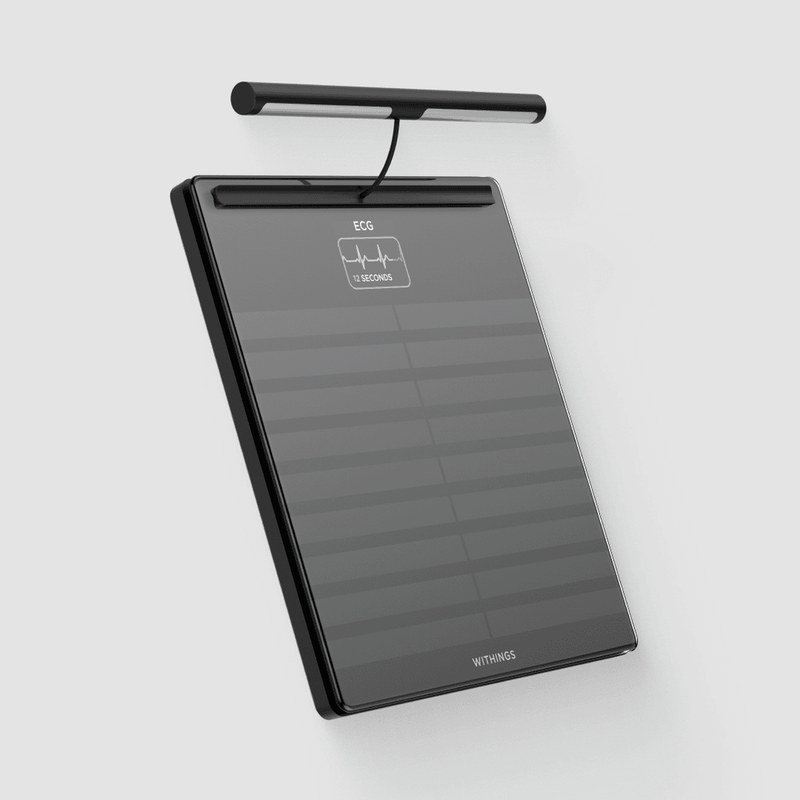
Withings Body Scan

★★★★☆ Very Good
~$499
  • BIA technology8-electrode, multi-freq
  • Segmental analysisYes
  • Reported metrics~40+ (incl. ECG)
  • Wi-Fi syncYes
  • ECG / cardioYes (6-lead)

Best for: Premium-tier buyer wanting cardiovascular metrics.

Visit Withings →

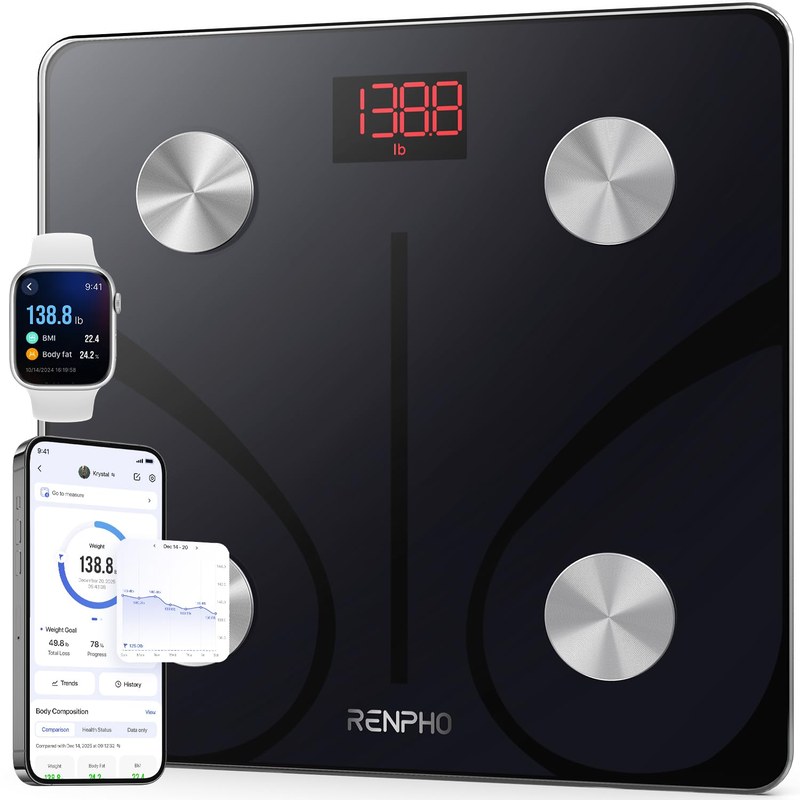
RENPHO Smart Body Fat Scale

★★★★☆ Good
~$25–$35
  • BIA technology4-electrode foot-to-foot
  • Segmental analysisNo (estimated)
  • Reported metrics~13
  • Wi-Fi syncNo (Bluetooth)
  • ECG / cardioNo

Best for: Budget entry / first-time tracker.

View on Amazon →

Editorial ratings reflect research-based judgment, not laboratory measurements. Different products may be better suited to different conditions, goals, and budgets.

Prices shown are approximate and subject to change. Verify current pricing at the retailer before purchasing.

Editorial research
Customer review analysis
Affiliate-supported, transparently disclosed
Updated May 2026
#1 Best Overall ★★★★★ Excellent

Hume Health Body Pod

Key Specs

  • Approx. price$229
  • Electrodes8-tactile
  • BIA frequencyMulti-frequency
  • Segments5 body regions
  • Metrics~45
  • User profiles24
  • ConnectivityBluetooth

Sub-category Ratings

Data DepthExcellent
App QualityVery Good
Measurement TechVery Good
Value for PriceExcellent

Editorial ratings reflect research-based judgment, not laboratory measurements.

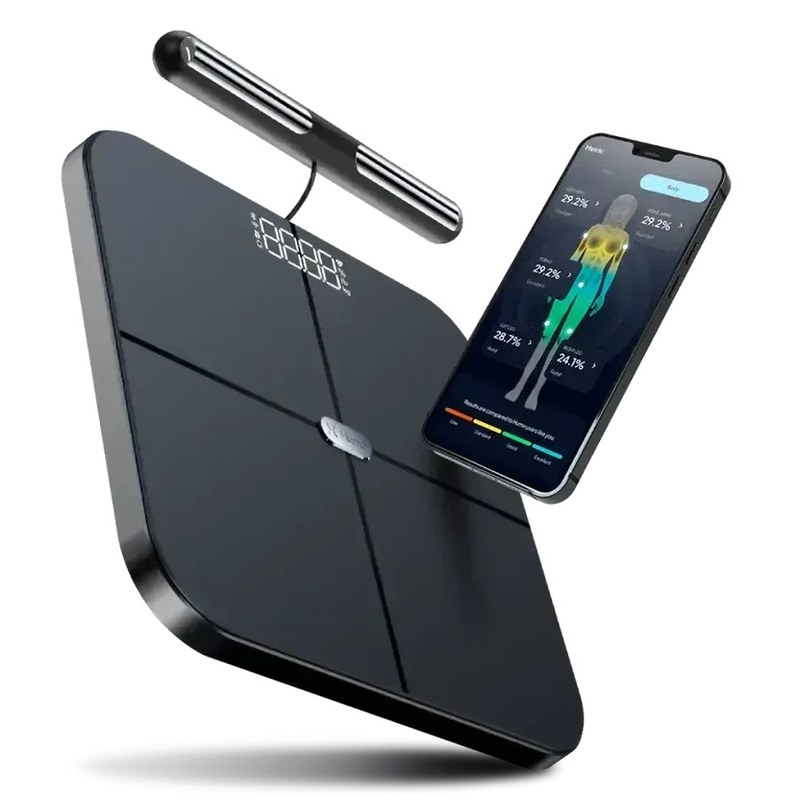
Hume Health Body Pod — 8-electrode segmental body composition monitor

What it is

A home body composition monitor with eight tactile electrodes — four on a retractable handlebar and four on the platform — that measures segmentally across five body regions (left arm, right arm, left leg, right leg, torso) and reports approximately 45 metrics including skeletal muscle mass, visceral fat, body water, and metabolic age.

Why it ranks #1 in our review

The hardware story is the headline. Eight tactile electrodes — four on the retractable handlebar plus four on the platform — let the device pass current across distinct body segments rather than estimating limb composition from foot-to-foot data alone. Multi-frequency BIA reads tissue resistance at more than one frequency, which improves the device's ability to distinguish intracellular from extracellular water. For most home users, the practical result is that per-limb readings reflect actual segmental measurements rather than algorithmic distributions of a whole-body number.

Value is the second reason it ranks #1. The Body Pod sits in the value-upgrade middle of the market — substantially more capable than entry-level 4-electrode scales, and substantially more affordable than the premium tier where comparable segmental devices sit closer to $500.

See Current Offers →

"The segmental readings are what made this feel like a real upgrade. Watching my left arm and right arm separately during a recomposition cycle gave me information a basic scale could never have surfaced — and at this price, that's the part that surprised me most."

— Composite of customer review themes from public sources. Customer reviews are publicly posted comments and are not independently verified by this site.

Strengths

  • 8-electrode design enables genuine segmental measurements rather than estimates.
  • ~45 metrics including skeletal muscle mass and visceral fat trends.
  • Mid-premium price point — substantially below comparable segmental devices in the premium tier.
  • HSA / FSA eligible per the manufacturer's documentation.
  • 24-user profile capacity for households.

Limitations

  • Bluetooth only — your phone must be present for readings to sync.
  • No cardiovascular metrics (no ECG, no vascular age).
  • Like all consumer BIA devices, accuracy varies with hydration and other measurement conditions; best used for trend tracking, not single-reading precision.
  • Higher price point than budget scales — investment requires commitment to regular use.
  • App required for full data access — no standalone display beyond basic weight.

Note on the Withings Body Scan

The Withings Body Scan includes a 6-lead ECG for heart rhythm monitoring and WiFi connectivity — features the Hume Body Pod does not offer. If cardiovascular monitoring is a priority, Withings is the stronger choice.

A note on accuracy. The Body Pod uses bioelectrical impedance, which estimates body composition rather than measuring it directly. Many customers report that segmental readings make it easier to spot whether one limb is lagging during a training cycle or losing lean tissue during weight loss; results vary based on individual factors and measurement consistency. Use this device as a trend tool over weeks and months under consistent conditions — not as a substitute for a clinical body composition assessment.

Best suited for

  • Readers tracking body recomposition (losing fat while maintaining or gaining muscle).
  • Buyers who want segmental measurements (per-arm, per-leg, torso) rather than whole-body estimates.
  • People monitoring lean-mass changes during structured weight management protocols.
  • Anyone who wants richer metrics than a basic 4-electrode scale at a price below the premium tier.

Prices shown are approximate and subject to change. Verify current pricing at the retailer before purchasing.

Check Current Pricing →   Visit Official Site →
#2 Premium Alternative ★★★★☆ Very Good

Withings Body Scan

Key Specs

  • Approx. price$499
  • Electrodes8-tactile
  • BIA frequencyMulti-frequency
  • Cardiovascular6-lead ECG
  • Metrics~40+
  • ConnectivityWi-Fi + Bluetooth

Sub-category Ratings

Data DepthExcellent
App QualityExcellent
Measurement TechExcellent
Value for PriceGood

Editorial ratings reflect research-based judgment, not laboratory measurements.

Withings Body Scan — premium body composition monitor with 6-lead ECG

Why it's #2

The Withings Body Scan is the right pick for a specific buyer: someone willing to pay roughly twice as much as the Hume for cardiovascular metrics, Wi-Fi syncing, and the most polished app in the category. The hardware is genuinely impressive — 8-electrode segmental BIA, more than 40 reported metrics, a 6-lead ECG cleared by the FDA for atrial-fibrillation detection (clearance K222731), vascular age estimation, and a small heart-rate display on the device itself.

Where it pulls ahead is the ecosystem. Withings Health Mate is a flagship third-party app in the Apple Health ecosystem, and Wi-Fi syncing means readings travel without a phone present at the time of weigh-in. The trade-offs are real: the retail price sits around $499, and Withings markets a Withings+ subscription that may unlock or extend certain features over time. Confirm what is included with the device versus what requires the subscription on the Withings site before purchase.

"The cardiovascular features are what justified the price for me. Pairing weight, body composition, and a 6-lead ECG in one weigh-in changed how I think about my morning routine."

— Composite of customer review themes from public sources. Customer reviews are publicly posted comments and are not independently verified by this site.

Strengths

  • 6-lead ECG with FDA 510(k) clearance for AFib detection.
  • Vascular age estimation and heart-rate readout on the device.
  • Wi-Fi syncing — no phone needed at weigh-in.
  • Withings Health Mate is the strongest app in the category.

Limitations

  • ~2× the price of the Hume Body Pod.
  • Some advanced features may require a Withings+ subscription — confirm before purchase.
  • Same BIA-based body composition limitations as any home device.

A note on accuracy. The Withings Body Scan uses the same underlying BIA technology as the Hume — body composition numbers are estimates, not direct measurements. The cardiovascular features (ECG, vascular age) are the genuinely differentiated capability here, not better fat-percentage accuracy. Many customers report that the ECG and vascular age trends are the most useful daily-use feature; results vary based on individual factors and measurement consistency.

Best suited for

  • Buyers who want cardiovascular metrics (ECG, vascular age) alongside body composition.
  • Apple Health power users who want the strongest app integration.
  • Households where Wi-Fi syncing without a phone present matters.

Prices shown are approximate and subject to change. Verify current pricing at the retailer before purchasing.

Visit Withings →

#3 Budget Pick ★★★★☆ Good

RENPHO Smart Body Fat Scale (Elis 1)

Key Specs

  • Approx. price$25–$35
  • Electrodes4 (foot-to-foot)
  • BIA frequencySingle frequency
  • SegmentsNo (estimated)
  • Metrics~13
  • ConnectivityBluetooth

Sub-category Ratings

Data DepthFair
App QualityGood
Measurement TechFair
Value for PriceExcellent

Editorial ratings reflect research-based judgment, not laboratory measurements.

RENPHO Smart Body Fat Scale — entry-level body composition monitor

Why it's #3

The RENPHO is genuinely a reasonable entry-level choice for someone who has never owned a smart scale. At $25–$35, it costs less than the shipping on a premium-tier device, the RENPHO Health app pairs quickly, and the basics — weight, body fat percentage estimate, BMI, and a handful of derived metrics — are presented cleanly enough for a first-time tracker.

The limitations, though, are real and worth stating plainly. This is a 4-electrode foot-to-foot BIA scale, which means current passes only between the two feet. The per-limb numbers the app shows are estimated from a whole-body resistance reading rather than measured segmentally. Roughly 13 metrics are reported, versus ~45 on the Hume.

"For the money, it does what I needed — daily weigh-in, body fat estimate, weekly trend in the app. I don't expect clinical-grade numbers and I don't get them, but the trend line is useful."

— Composite of customer review themes from public sources. Customer reviews are publicly posted comments and are not independently verified by this site.

Strengths

  • Lowest price tier — accessible entry point.
  • Functional Bluetooth app pairing.
  • Reasonable for daily weigh-ins and basic trend tracking.

Limitations

  • 4-electrode foot-to-foot only — no segmental measurement.
  • Per-limb numbers in the app are estimates, not measurements.
  • ~13 metrics versus ~45 on segmental devices.
  • No ECG, no vascular age, no Wi-Fi syncing.

A note on accuracy. 4-electrode foot-to-foot scales have wider error bars than 8-electrode segmental devices, particularly on lean-mass estimates. Many customers describe the body-fat-percentage estimate as directionally useful but not precise enough to compare against a clinical measurement; results vary based on individual factors and measurement consistency.

Best suited for

  • First-time body-composition trackers.
  • Budget-constrained buyers.
  • Readers primarily interested in basic weight + trend tracking.

Prices shown are approximate and subject to change. Verify current pricing at the retailer before purchasing.

View on Amazon →

Which Body Composition Monitor Should You Choose?

A three-path decision framework based on what you actually plan to do with the device.

Tracking recomposition or structured weight management progress

If you're losing fat while trying to maintain muscle — or monitoring lean mass during a structured weight management protocol — segmental measurement is the meaningful upgrade. the Hume Health Body Pod.

BodyScanHQ does not provide medical advice. If you are using prescription weight management medications, consult your healthcare provider before making changes to your monitoring or treatment approach.

Cardiovascular metrics matter

If you want ECG, vascular age, or Wi-Fi syncing without a phone present, the price step-up is justifiable. the Withings Body Scan.

First-time tracker on a budget

If you've never owned a smart scale and want a reasonable entry point, the foot-to-foot tier is fine for basic trend tracking. the RENPHO Smart Body Fat Scale.

A note on Garmin users. The Garmin Index S2 is a reasonable alternative for buyers fully embedded in the Garmin Connect ecosystem who want body composition data alongside their watch metrics. It is not separately reviewed here because our editorial focus is on segmental hardware and the value-tier comparison; Garmin Connect users who don't need segmental analysis may find the Index S2 the most natural fit for their existing app.

How We Evaluated

About BIA Technology: All bioelectrical impedance analysis (BIA) devices — including the Hume Body Pod — are most accurate when used consistently under the same conditions (same time of day, same hydration state). Single readings vary with water intake, exercise, and meal timing. BIA is best used as a trend-tracking tool over weeks and months, not as a single-session absolute measurement.

Our editorial methodology is based on three inputs: manufacturer-published specifications, analysis of publicly available customer reviews on retail and review platforms, and editorial judgment about how each product fits common use cases. Our four evaluation criteria are: segmental measurement depth, metric breadth and relevance, value relative to price tier, and app usability and trend visibility. These criteria are weighted toward what matters for the readers we cover — primarily body recomposition, GLP-1 lean-mass monitoring, and the upgrade-from-basic-scale buyer.

We do not present our coverage as independent or unbiased — we have a commercial relationship with the products we recommend, and we'd rather make that clear than dress it up. We do not conduct laboratory testing or controlled accuracy comparisons against reference standards such as DEXA, hydrostatic weighing, or BodPod. We do not have access to professional body-composition equipment for direct validation. Our rankings reflect editorial judgment about product fit, not clinical evaluation.

That distinction matters. A site that claims to be "independent" while linking to affiliate products is making a contradiction visible to any thoughtful reader. We'd rather be honest about the model and let the editorial work speak for itself.

All three devices we cover use bioelectrical impedance analysis, which estimates body composition by measuring the body's resistance to a small electrical current. BIA estimates correlate with reference methods such as DEXA but are not the same as a clinical scan. Most home BIA devices have error ranges of several percentage points on body fat estimates compared with DEXA, and readings can shift with hydration, recent food intake, exercise, and time of day.

The most useful way to use any home BIA device is to track trends over weeks and months under consistent conditions — not to treat any single reading as a definitive measurement. If you want a clinical baseline, a single DEXA scan can anchor where you are; the home device then tracks the slope between scans.

Frequently Asked Questions

Bioelectrical impedance scales correlate with reference methods like DEXA but are not the same as a clinical measurement. Most home BIA devices have error ranges of several percentage points on body fat estimates compared with DEXA, and readings can shift with hydration, recent meals, exercise, and time of day. The most useful approach is to track trends over weeks and months under consistent conditions rather than treating any single reading as a definitive measurement.

No. A DEXA scan is a clinical measurement using X-ray absorption and remains the practical reference standard for body composition. Home BIA devices are useful for tracking trends and making consistent measurements between clinical scans, but they should not be treated as equivalent to DEXA.

For most users, the most useful metrics are weight, body fat percentage (tracked as a trend), skeletal muscle mass, visceral fat, and total body water. Other reported metrics — metabolic age, body type classifications, score numbers — are largely derived from the primary measurements and are best treated as supplementary.

Bioelectrical impedance scales pass a small electrical current through the body. Manufacturers typically advise against use during pregnancy and for users with implanted electronic medical devices such as pacemakers or implantable cardioverter-defibrillators. Read the manufacturer's safety guidance before using any BIA device, and consult a healthcare provider with questions about whether the device is appropriate for your situation.

Some are; eligibility depends on the specific product and the rules of the individual HSA/FSA plan. Manufacturers often publish HSA/FSA eligibility information on their product pages. Consult your plan administrator or tax advisor to confirm eligibility before purchase.

A common approach is once per day or once per week, taken under consistent conditions (same time of day, same hydration state, on a hard floor surface, with bare clean feet). Daily readings will fluctuate by several percentage points based on water content alone — the most useful interpretation comes from a 7-day or longer rolling trend rather than any single day's number.

Full affiliate disclosure. BodyScanHQ is an affiliate-supported review and comparison site. The links to the Hume Health Body Pod on this page are affiliate links — we may earn a commission on purchases through MaxBounty at no additional cost to you. The link to RENPHO uses Amazon search and may earn us a commission through Amazon's affiliate program. The Withings link is a non-affiliate manufacturer link. Editorial recommendations on this page reflect research, analysis of publicly available customer reviews, and editorial judgment based on product positioning and typical use cases — not laboratory testing. Different products may be better suited to different conditions and goals. See our full Affiliate Disclosure for additional detail.

Find the Right Body Composition Monitor for Your Goals

For most readers in the audiences we cover — body recomposition, GLP-1 lean-mass monitoring, and the upgrade-from-basic-scale buyer — the Hume Health Body Pod is our recommended pick. The 8-electrode segmental hardware delivers measurement depth that foot-to-foot designs cannot, at a price meaningfully below the premium tier.

See Current Offers →